
Burke County Court Docket Searches
For Burke County case searches, the public starts at the North Carolina eCourts Portal. Pick Smart Search. Type a record number, or a name in the Portal's format, Lastname, Firstname. Once the first pass is done, Advanced Filtering lets you limit results to Burke County and, if helpful, trim them further by case type, status, party information, or a span of filing dates. Remember that the Portal cannot run an advanced filter on a blank screen. Your opening name or number does the real work.
A Burke County court docket search goes fastest with the number from a citation, summons, calendar, or clerk notice. Name searches also work in the public Portal, but the list stops at 200 results. If a search comes back too broad, tighten the location, case status, filing window, or spelling. Anonymous public access is free. A standard account saves cases you want to track, though it grants no access to restricted material on its own.
- Open Portal Smart Search and enter a Burke County case number or a name in the required last-name, first-name order.
- Use Advanced Filtering to choose Burke County, then apply a case type, status, or date range only if it helps narrow the result.
- Open the underlined case number to review the public Register of Actions, also called the Case Summary.
- Use the Hearings area or Portal Search Hearings when the question is a current setting rather than the case history.
- Contact the Burke County Clerk of Superior Court for a certified copy, a restricted-record question, or the actual case file.
Note: The Portal is a public case-reference tool. The Burke County Clerk of Superior Court holds the official court file.
Search Burke County Portal Dockets
Portal is a window into Enterprise Justice. That is the case-management system also called Odyssey that North Carolina courts now run on. For eligible Burke County matters, its Smart Search pulls a near-real-time public Case Summary. Check the live labels on the screen. Not every case offers the same filters, so do not assume they will match. Depending on the search path you pick, different fields come into play. Party name, business name, citation number, record number, location, case type, and status can each matter.
| Portal control | Burke County use |
|---|---|
| Record Number or Name | One basic value is required before advanced filters can run. |
| Location | Select Burke County to avoid a statewide result list. |
| Case Type and Status | Use only when the live choices help separate a public case category. |
| Filing Date Range | Useful when a common name returns too many cases. |
| Underlined case number | Opens the public Case Summary or Register of Actions. |
North Carolina's eCourts overview explains the statewide system behind the Burke County search layer.
The statewide rollout hands Burke County one public starting point. Even so, a Portal screen is never a clerk-certified record.
Court Dockets: What They Show
Think of a Burke County court docket as a case history in date order. Portal labels its version the Register of Actions or the Case Summary. The display can include Case Information, Assignment Information, public party information, case events, dispositions, hearings, financial information, and public documents where those sections exist for a case. Not every block shows up every time. Hearings and financial details appear only when the clerk has recorded something to show.
| Case Number | Enterprise Justice combines a filing year, case-type letters, six-digit sequence, and county identifier. |
|---|---|
| Case Information | Public case-level details whose labels can differ by the type of matter. |
| Case Events | Dated filings, service events, hearings, orders, and other public docket activity. |
| Hearings | Scheduled court events when populated; use Search Hearings to check the active setting. |
| Dispositions | Recorded outcomes or status information, with Smart Search giving more current detail than the judgment index. |
| Documents | Public documents where available; confidential and sealed material remains unavailable. |
One quirk: case events converted from before Burke County's eCourts launch can display a 12:00 a.m. time. That stamp is an artifact of conversion, not proof the courtroom event happened at midnight.
Burke County Register of Actions Dockets
People still call it a court docket, and the term works fine for searching. Inside Portal, the case-event display goes by Register of Actions or Case Summary. The distinction matters more than it sounds. A Register summarizes the clerk's record. It does not replace the physical or official electronic file. It is good for locating a filing, a disposition, or a hearing in Burke County. It cannot promise that every restricted item or every historical detail is visible online.
- Register of Actions
- Portal's name for the public chronological summary of docket events.
- Case Summary
- An alternate Portal label for the same public case-event view.
- Disposition
- A recorded procedural result or outcome; it is not merely a hearing notice.
- Pending
- A Portal status showing the case has not reached a final disposition in that status taxonomy.
- Elevated Access
- Statutory, role-based access beyond anonymous or ordinary registered Portal access.
For a four-part number, copy the exact characters from the court document. Official materials show a pattern like 21CR000007-910. That is only an illustration, not a Burke County suffix to guess at.
Burke County Courts and Their Dockets
Burke County sits in Superior Court District 36 and District Court District 36. One office keeps the records for both divisions: the Clerk of Superior Court. Burke County has no separate county clerk and district clerk splitting the work. Before you search, figure out what kind of case you have. A felony, a higher-value civil action, a traffic infraction, a small claim, and a family matter may all surface in the same statewide Portal. Yet they start in different court divisions.
| Court layer | Typical Burke County matters | Record path |
|---|---|---|
| Superior Court | Felonies, civil cases over $25,000, and District Court criminal or infraction appeals. | Portal, Burke Clerk, posted calendar, and Superior Court contact. |
| District Court | Misdemeanors, traffic, small claims, family matters, juvenile proceedings, and civil actions generally at or below $25,000. | Portal, Burke Clerk, posted calendar, and District Court contact. |
| Magistrate | Limited criminal process and lower-level civil proceedings, including small claims. | Unified clerk system, Portal when public, and magistrate contact. |
| Clerk matters | Estates, guardianships, foreclosures, and special proceedings. | Burke Clerk, Portal, and the clerk-office terminal. |
When a District Court criminal or infraction case is appealed, Superior Court hears it anew. If the Portal status says the matter was transferred or appealed, find the destination case or court first. The earlier docket is not the current one.
Burke County Clerk Record Hub
The Burke County Courthouse serves as the local record hub. It houses the Clerk of Superior Court, Superior Court, District Court, magistrates, family services, juvenile court, and the district attorney. Portal not answering your question? The clerk's public terminals are a second route. Use them when a public Portal search falls short, an older record needs a human touch, or the actual case file must be inspected. The Judicial Branch sends file-inspection requests to the clerk office in the county where the case is located.
Burke County Clerk of Superior Court
Burke County Courthouse
201 South Green St, Morganton, NC 28655
(828) 433-3200
The official Burke court contact directory identifies the clerk and related court-office routes.
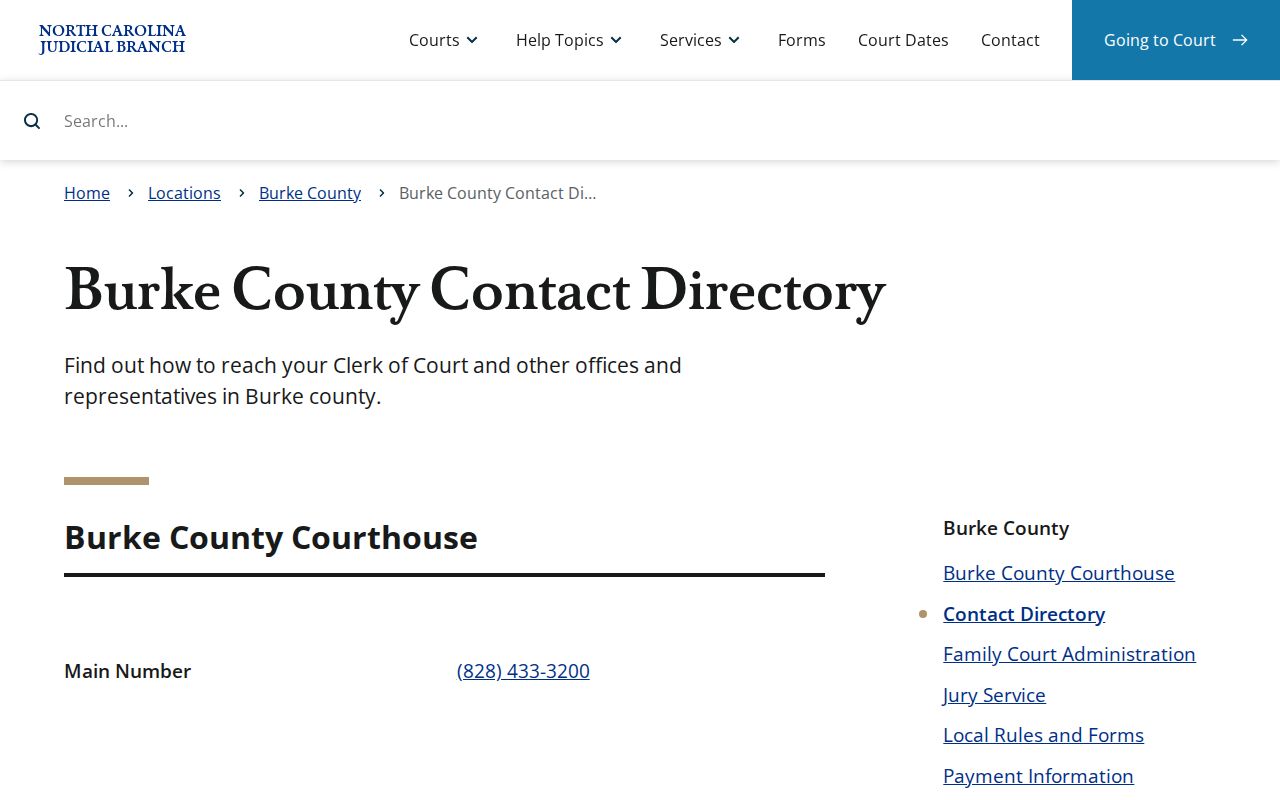
The directory helps route a local-setting question to the right place. The clerk remains the primary fallback for record access. Burke County government is a separate county-office resource. It does not replace the Judicial Branch's court-record channels. Its official pages cover county offices and services rather than the work of the courts themselves.
Keeping county administration and the court system separate helps a court record request reach the correct office on the first try.
Court Dates and Settings in Burke County
A printed calendar date for a Burke County hearing is a decent first clue. It is not the last word. Portal Search Hearings asks for a location, a hearing type, and a search type before anything else. From there the query can run on a case number, a party or business name, attorney details, a judicial officer, or a courtroom paired with a date range. Search Hearings shows where and when a matter sits right now. The Case Summary's Hearings section supplies the surrounding case context.
The county's official location page also points to the civil and criminal calendar publications. When a setting shifts, work down a simple chain. Start with Search Hearings, then the current Case Summary. Then the posted Burke calendar, then the right court office, and finally the clerk. One more caution: a calendar time says nothing about calling order. It also says nothing about whether an appearance is remote. Only the current court instruction answers that.
For a fuller route through the calendar tools, use the Burke County court schedule once the live hearing result is in hand.
Burke County Hearing Search
Burke County's Judicial Branch page pulls together the main ways to check a court docket for this county. It links the court-date search along with civil and criminal calendar channels. Bring the exact case number if you have it. That pins down the current hearing fast. A name search works too, though a common name in Burke County can return so many matches that you will spend time filtering. Room and judicial-officer searches only help once you have picked the right courthouse and a narrow date window.
The official courthouse page names the court-services building where these Burke County hearings are held.
Burke County court-services links pair the online hearing search with clerk and courtroom confirmation whenever a setting looks shaky. A stale date is a real risk. A hearing that was continued can linger in the event history, so find the latest setting before you rely on any date in the court docket.
Docket Access Under North Carolina Law
North Carolina law puts court records, files, dockets, and indexes in the clerk's hands, subject to statutory limits and court orders. In Burke County that splits access in two. A public Portal result and a walk-up inspection at the clerk's office can coexist for the same file. Neither one cracks a sealed or confidential record. Registering with the Portal grants no special statutory access either.
Key Rules:
N.C. Gen. Stat. § 7A-109 requires clerks to maintain court records, dockets, and indexes, with public inspection subject to legal restrictions.
N.C. Gen. Stat. § 132-6.2 covers access to existing public records but does not require an agency to create or compile a new record.
N.C. Gen. Stat. § 7B-3000 restricts juvenile court records except as the statute or a court order allows.
N.C. Gen. Stat. § 15A-146 provides an expunction path in specified dismissed-charge and not-guilty situations.
Sealed files, juvenile matters, certain protective orders, unreturned warrants, and other restricted material stay out of public docket search results. These limits apply to the docket search itself. A blank screen proves nothing about whether a case existed. Recheck the case number, the spelling, and the county. Then let the Burke Clerk steer the next step on any Burke County court record.
Burke County eCourts Docket Conversion
Burke County joined eCourts on October 13, 2025, part of North Carolina's final thirteen-county rollout. The switch delivered the Enterprise Justice case-management system, an online public-record search, and a separate File & Serve e-filing route. The two tools serve different masters. Portal displays eligible public records, calendars, judgments, and payments. File & Serve handles the electronic filing and filing-status work attorneys do. Same modern court environment, different jobs. The official October 2025 eCourts release lists Burke among the counties that went live, confirming the county's place in the state's docket conversion.
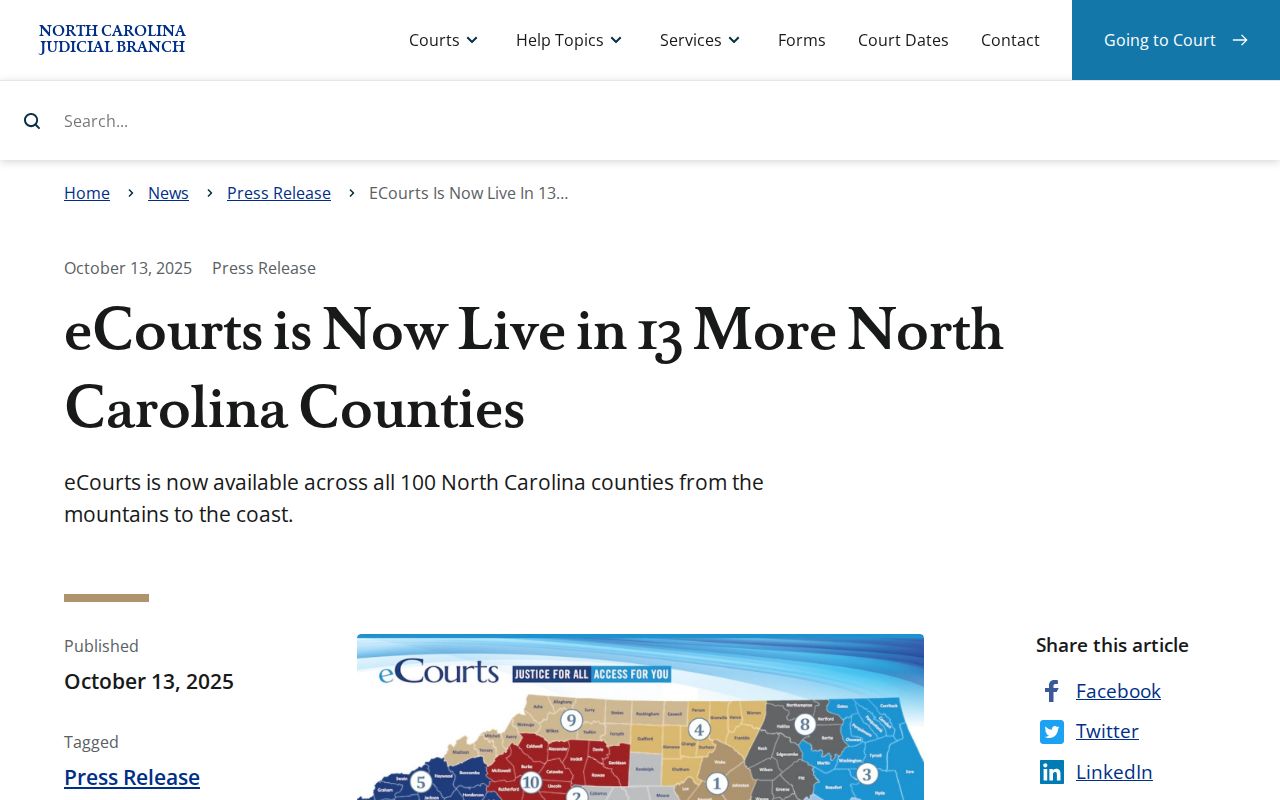
The rollout explains why a Burke County docket search now opens with Portal. Yet an older, converted record can still call for clerk help. Legacy records moved over from prior systems. The seams show. A strange timestamp or a legacy document that will not open is a clue. So is a thin historical result. Ask the clerk which record source or file fits. Do not assume the whole case sits online. The Burke court record may simply live in a clerk file rather than the Portal.
How the Clerk Keeps Docket Records
The Burke County Clerk of Superior Court keeps the record for Superior Court and District Court files. Criminal actions, civil actions, small claims, estates, special proceedings, and clerk matters all sit there. That unified setup explains the Portal results. A traffic ticket, a felony, and a civil suit can all surface in the statewide Portal. Each one traces back to a single county record office. The Portal finds the case. The clerk holds the official file and issues certified documents.
Public self-service terminals at clerk offices are a documented statewide channel for criminal, civil, special-proceeding, and estate information. Want an official copy? Identify the case number and the document. Tell the clerk whether you need a plain, certified, or exemplified version. Confirm the total and turnaround before paying. One caution: the NCAOC public-record form cannot replace a Burke case-file request, because NCAOC itself says county clerks hold those case documents. The Burke County Courthouse page gives the official record-access location for docket business done in person.
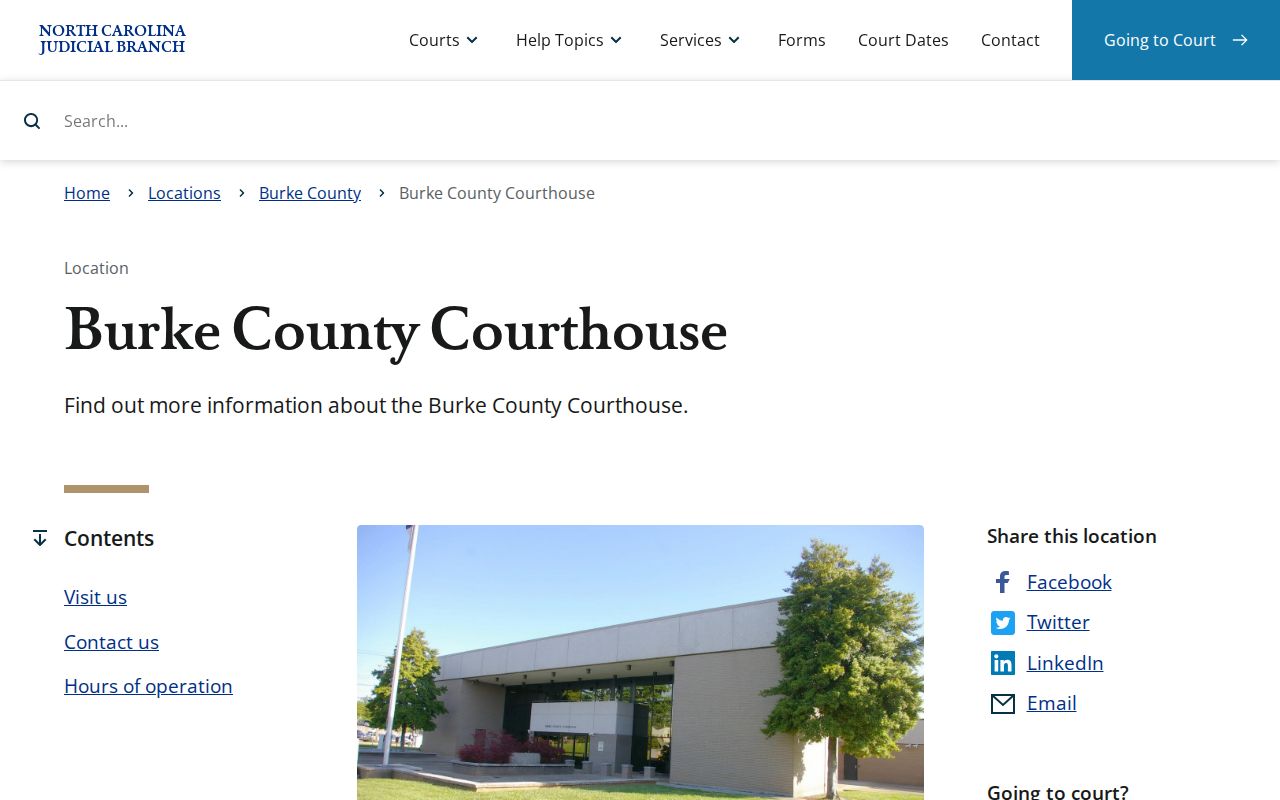
The courthouse is the practical in-person route for a Burke County case file and the clerk-held record services.
Burke County Treatment Court Docket Boundary
The Burke County court location page names Adult Treatment Court among its related courts and programs. A Judicial Branch map from January 2025 places Burke Adult Treatment Court in District 36. The March 2025 recovery-court report gives 2024 program totals. It counted 23 referrals, 14 new admissions, 23 enrolled participants, and seven successful exits. Those numbers describe the program's past. They are not a current caseload and not a list of public cases.
A participant's underlying criminal or civil case may carry a public Portal Case Summary. That only holds when the case type is public. Treatment participation and confidential program details stay private. That holds even when the underlying case can be located. Burke County posts no dedicated treatment-court calendar, roster, judge assignment, or separate Portal filter. For statewide program information, the North Carolina recovery-courts resource is the right source.
City-by-City Court Dockets in Burke County
Morganton, Valdese, Drexel, Hildebran, and Glen Alpine anchor the five city profiles here. They were chosen from Burke County's wholly-in-Burke municipalities by 2020 Census ranking. None of them runs its own court. North Carolina has no separate local court systems. No town in Burke County keeps a municipal court or municipal court docket. A city police or enforcement action can turn into a court case. That case lands in Burke District Court. It then flows into the unified clerk and Portal system. An appeal from District Court goes up to Superior Court.
Morganton Court Records
17,474 residents in the 2020 Census. City Hall is not a court counter; court records route through Burke.
Valdese Court Records
4,689 residents in the 2020 Census. Town services and police channels do not replace Portal or the clerk.
Drexel Court Records
1,760 residents in the 2020 Census. Municipal online payments are for town services, not a court search.
Hildebran Court Records
1,679 residents in the 2020 Census. Council and planning calendars are not court calendars.
Glen Alpine Court Records
1,529 residents in the 2020 Census. A town payment link is not a docket or case-status search.
Burke County City Citation Dockets
A citation written in Morganton, Valdese, Drexel, Hildebran, or Glen Alpine creates no separate city judicial record. North Carolina's structure gives District Court original jurisdiction over non-felony criminal matters. Municipal ordinance violations sit inside that jurisdiction. So search Portal with Burke County selected for the public case or citation. Use Search Hearings for the date. Ask the Clerk of Superior Court for the court file or an official record.
Keep municipal administration and court administration apart. Town halls, police departments, code-enforcement offices, and vendor payment pages all serve city functions. None of them offers a local judicial docket, court calendar, or certified-copy desk. Where is the real court docket for these towns? It sits with the county and state systems.
Map and Directions to the Burke County Courthouse
Superior and District Court files for Burke County are kept by the Clerk of Superior Court at the Burke County Courthouse, 201 South Green St, in Morganton. The same building also houses Superior Court judges, District Court judges, magistrates, family court, juvenile court, and the district attorney, so it is the single stop for a Burke case regardless of division. Published counter hours run Monday through Friday, 8:30 a.m. to 5:00 p.m.
Burke County Courthouse
201 South Green St
Morganton, NC 28655
(828) 433-3200
Monday through Friday, 8:30 a.m. to 5:00 p.m.
The courthouse page does not publish a parking policy or entry-security procedure, and jury materials note only that a cell phone must be fully powered off once a juror is in trial. Calling the Clerk at (828) 433-3200 before a records trip is the practical way to confirm current visit procedures.